
#197 - Ants
1 Family Photo, 1 Dad-Joke, Many Highlights
Family Photo:
Ants

The other day, Calvin watched a LEGO YouTuber build a LEGO Ant Farm. Naturally, the next day he went outside with a little cup and tried to gather ants into his own ant farm. It was the same day we were leaving on our spring break trip to Truckee:
Me: Cavlin, don’t collect the ants. We’re going on a trip and can’t take them with us.
Calvin: Why can’t we take them with us?
Me: Um, because then they’ll be far from their home.
Calvin: Maybe we can take them to the forest and give them a better home?
Hmm...Clever.
After some more discussion, Calvin agreed to leave the San Luis Obispo ants in San Luis Obispo.
Joke’s on me though: the van we rented for our family trip—the only van they had; sorry for the convenience—had been returned the previous night and not well cleaned by the rental agency. Shortly into our trip, some ants started crawling out of the doors and walking around the cabin. Rather than being upset, Calvin was quite excited.
It turns out, we did manage to take a few ants to the forest and give them a better home.
Dad Joke:
Ant Bodies
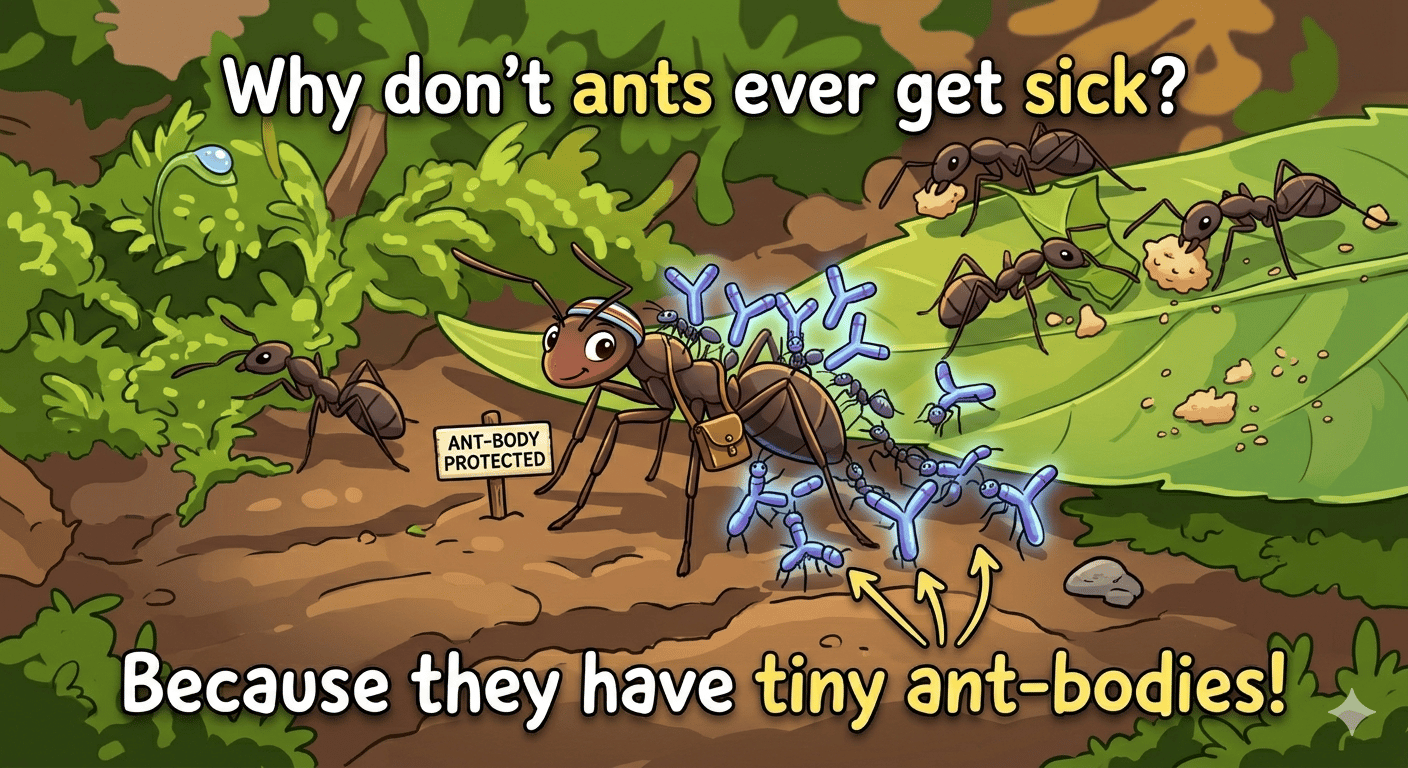
Source: ChatGPT Dad[AI]Base
Image: Gemini
Highlights:
Consider the Ant
6 Go to the ant, thou sluggard;
consider her ways, and be wise:
7 Which having no guide,
overseer, or ruler,
8 Provideth her meat in the summer,
and gathereth her food in the harvest.
9 How long wilt thou sleep, O sluggard?
when wilt thou arise out of thy sleep?
10 Yet a little sleep, a little slumber,
a little folding of the hands to sleep:
11 So shall thy poverty come as one that travelleth,
and thy want as an armed man.
The Ant and The Grasshopper: A Financial Lesson by Honest Money
A valuable financial lesson inspired by and adapted from the Aesop’s fable I read to my 20-month-old daughter.
In the height of summer (the good times) the grasshopper frolicked, played, and sang (spent), whilst the ant worked hard to collect enough food (saved) for the winter (the bad times). “Come and play with me!”, said the grasshopper. “I’m busy collecting as much food as I can for the winter. It’s coming soon and there will be nothing to eat when it does”, said the Ant. “Winter is ages away. I’ve got plenty of time!”, replied the Grasshopper. And just like that, days quickly became weeks, and the chill of winter was on them in a flash. Food became extremely scarce. Nestled in his warm home, the ant had more than enough food to get him through the winter (the bad times). The Grasshopper, stuck out in the cold, regretted having frolicked, played and sang (spent), so much, and not having collected enough food (saved) during the summer (the good times).
In my time working in financial services, one of the greatest lessons I’ve learnt is that there are bad things that will come along and derail our finances if we are not careful. These bad things are unexpected, sudden, and costly. They often come in multiples. We may not know what they are yet, but we can be prepared for them come whatever may.
--
As Morgan Housel discussed in his brilliant book “The Psychology of Money”: “You don’t need a specific reason to save…You can just save for saving’s sake. And indeed, you should. Everyone should...
…Savings without a spending goal gives you options and flexibility, the ability to wait and the opportunity to pounce. It gives you time to think. It lets you change course on your own terms.” Let’s all aim to be diligent ants (most of the time) in the good times so that we can be safe, and maybe even opportunistic, in the bad times.
Deborah Gordon on Ants, Humans, the Division of Labor and Emergent Order (EconTalk Podcast)
The basic mystery about ant colonies is that there is no management. A functioning organization with no one in charge is so unlike the way humans operate as to be virtually inconceivable. No insect issues commands to another or instructs it to do things in a certain way. No individual is aware what must be done to complete any colony task. Each ant scratches and prods its way through the tiny world of its immediate surroundings. Ants meet each other, separate, go about their business. Somehow these small events create a pattern that drives the coordinated behavior of colonies.
--
Colony acts as if it’s wise even though no one member is wise. Like Surowiecki’s Wisdom of Crowds, Smith’s invisible hand, Hayek’s “Use of Knowledge in Society”.
--
What knowledge would we want someone to have to make the right decision? Unfathomably much, and may not even exist till the crisis. No way that a central authority could acquire the information and then send it out to users before yet something else changed. But each supplier only looks at one thing--the price of one good. Similar to ants just looking at the hydrocarbons. Self-regulating. Imperfect, things can get missed, but amazing that it works at all and that it works better than any other system. Each of us is like the ant. We have our task, we try to do it well, sometimes we mess up, but overall there is an immense amount of order in our society.
But unlike the ants we have sentience, intelligence, can try to respond with whole new ways to do things; dynamic element that ants don’t have.
iamJoshKnox Highlights:
Night Shift
I submitted a piece to the SLO Nightwriters writing contest.
Contest Instructions: Write a maximum of 2 pages of dialogue that follows a story arc — beginning, middle, and end. Minimal non-dialogue content—no more than stage directions.
Want to Be Interviewed?
I want to improve my interviewing skills:
Please REPLY if you’d like to do a 30-minute interview with me for a Podcast that doesn’t yet exist.
Or book some time on my calendar if there’s anything else you’d like to chat about:
https://calendly.com/iamjoshknox
Until next week,
iamJoshKnox