
#198 - Moon
1 Family Photo, 1 Dad-Joke, Many Highlights
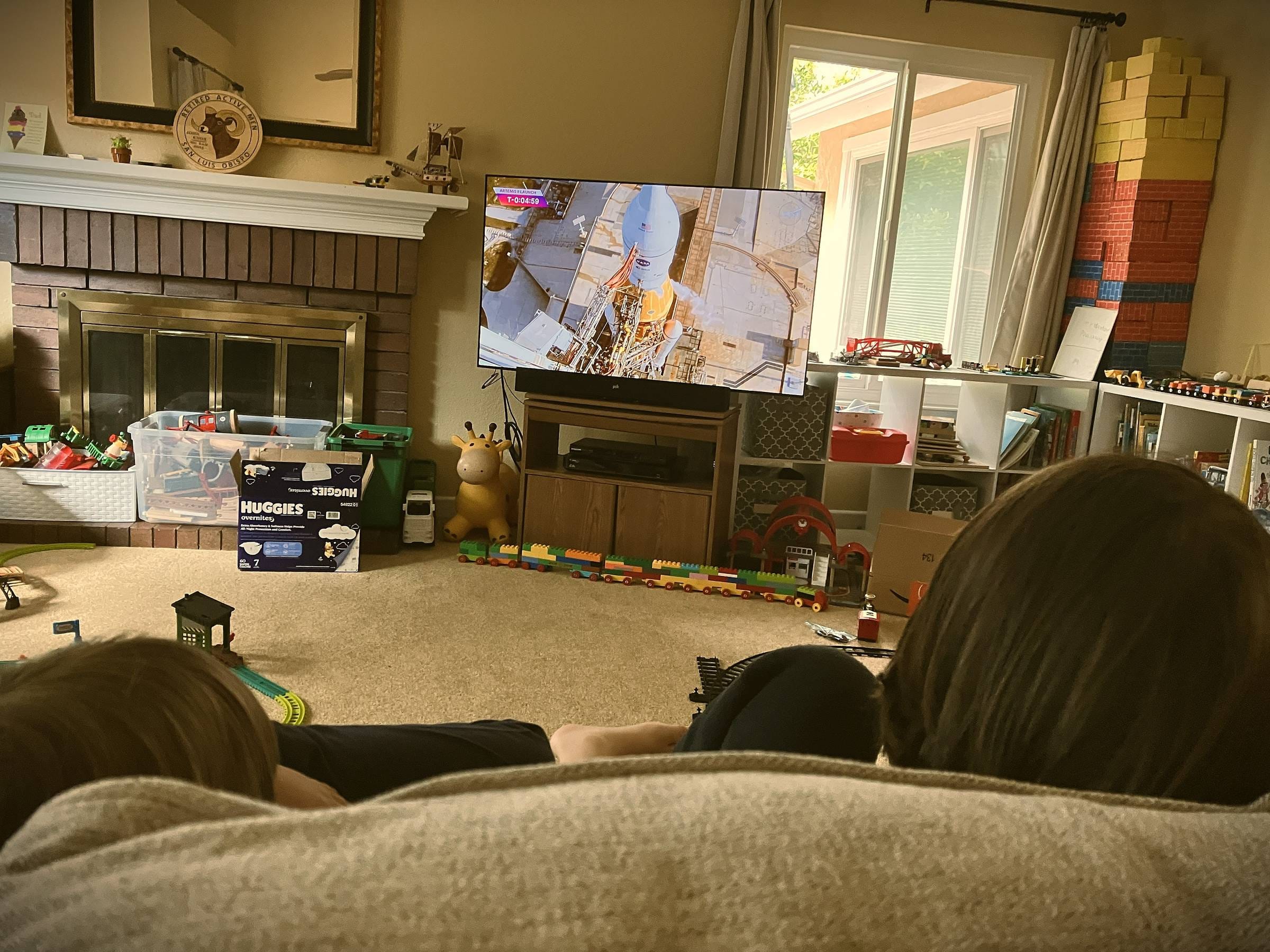
Family Photo:
Moon
With the Artemis II mission, there were a lot of good reasons to look up at the night sky this month. If you’re unfamiliar with the Artemis II astronauts’ trajectory, I’d encourage you to give this a watch:
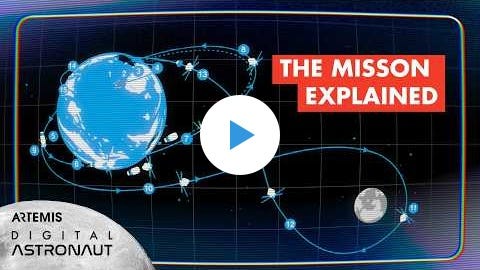
Or, if you really want to nerd-out, you can build the a visual of Artemis II’s trajectory from NASA’s raw data with this how-to video.
--
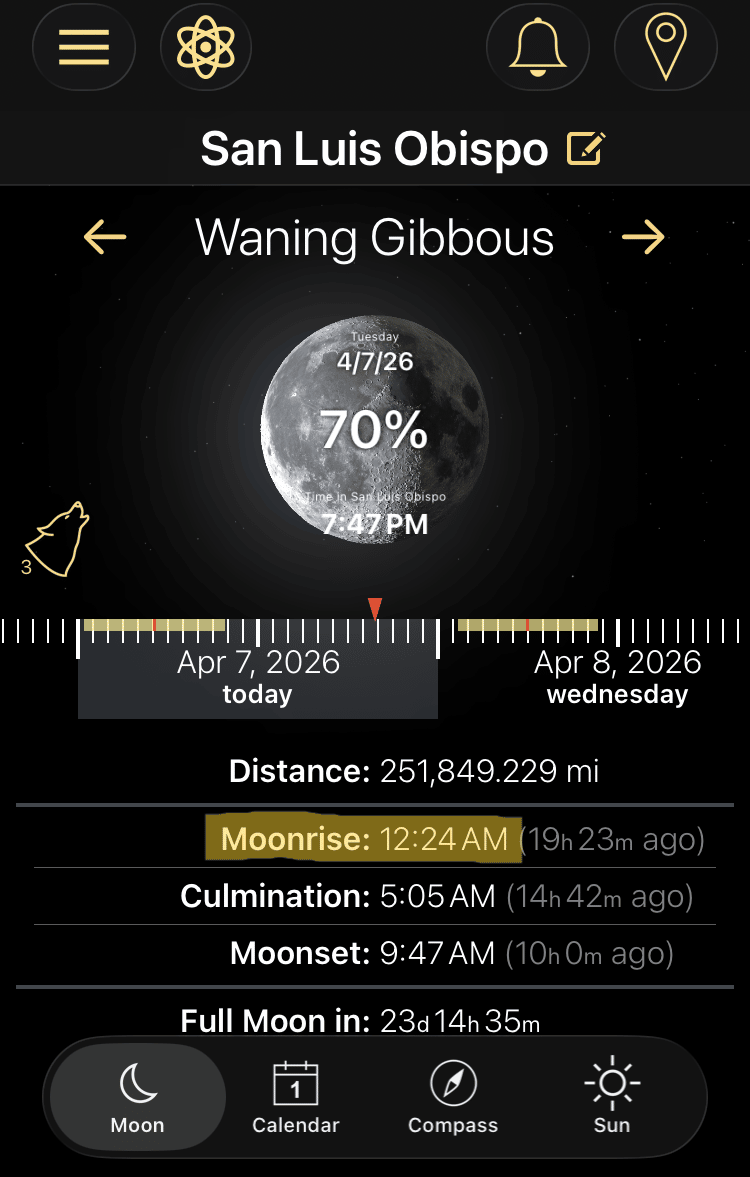
This month, Calvin’s teacher assigned a moon journal to his class. Each night, the kids are supposed to go outside and record their observations—write a sentence; shade in a little circle showing how much moon is visible—and document the moon’s transition from full, to new, and back to full again.
I had a moon journal assignment when I was in 4th grade. It corresponded with the passing of the Hale-Bopp comet. I think there was also a lunar eclipse that month. It felt special to be recording such an unusual astronomic phenomena. Hard to believe that was almost 30 years ago.
I remember each night’s entry had an “extra” component, like write a haiku, or create a crossword puzzle, or make an acrostic poem. It lead to 4th grade literary masterpieces like:
Moon:
Marvelous
Opulent
Opaque
Not made of cheese
Anyways, Calvin’s moon journal assignment has had a minor flaw. This cycle, on the Pacific Coast, the moon doesn’t come out until looong after bedtime. The kids can stare at the night sky in wonder, but they’ll have to keep wondering about the phase of the moon. Instead, we’ve had to use a moon tracking app and just take technology’s word for it.
In the future, I hope Calvin and Lawrence will have many more reasons to look up at the night sky in wonder. And that we get to observe many, many more moon cycles with love and joy.
Dad Joke:
VSVN
What does VSVN stand for? I’ve seen it on places other than Orion too.
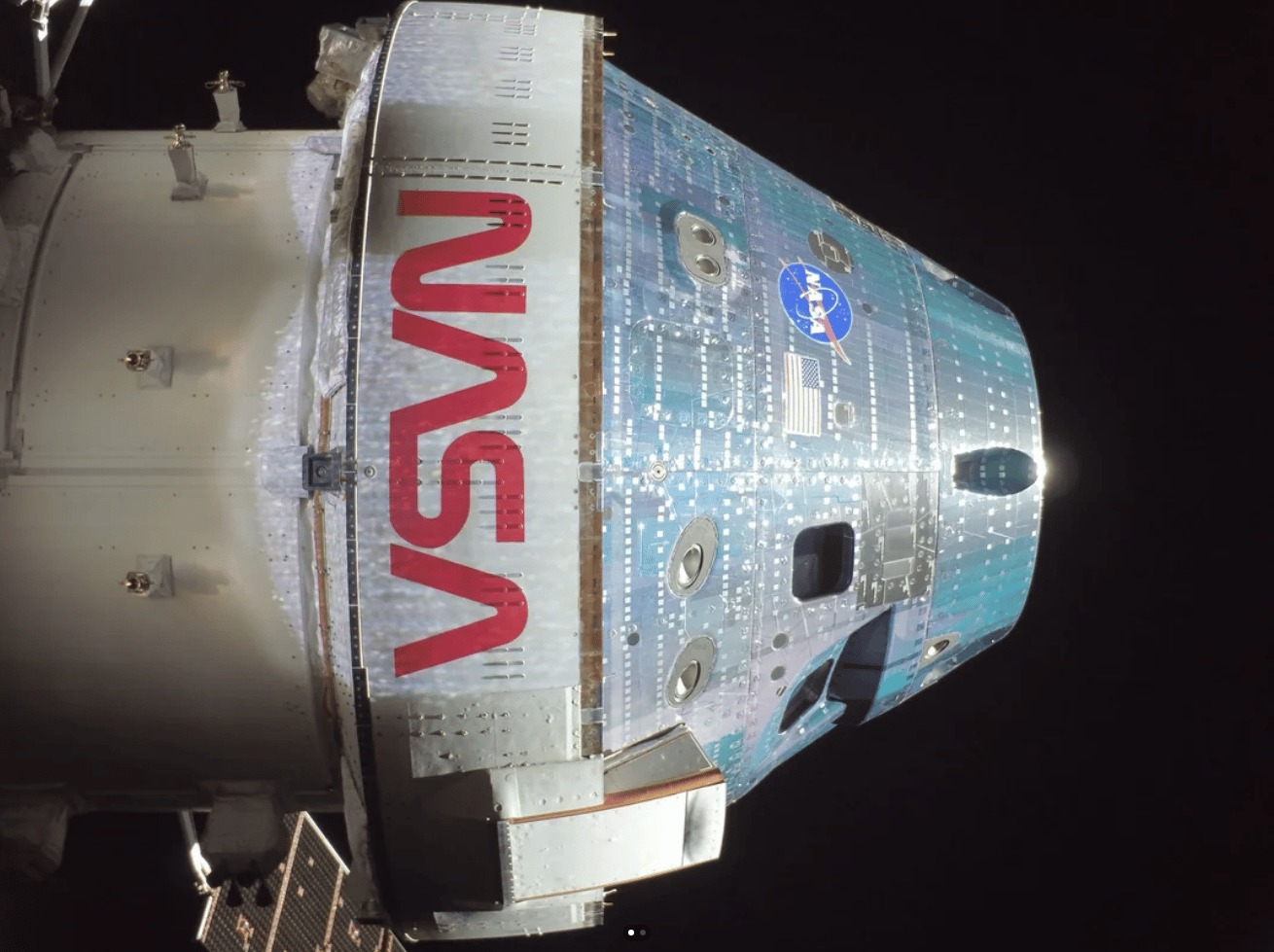

Source: Reddit
Highlights:
To The Moon
Peter Theil’s Religion by David Perell
The Apollo 8 mission required superhuman precision, equivalent in scale to throwing a dart at a peach from a distance of 28 feet, and grazing the top of the fuzz without touching the fruit’s skin. To reach the moon, America’s pioneers traveled across 240,000 miles, about fifty-eight times the distance Columbus sailed when he discovered the Western world. As the Apollo rockets pierced through the stratosphere, and navigated the pin-drop silence of outer space, they inspired people back on earth to expand their horizons.
...
Between 1968 and 1971, Pan Am accepted 93,005 reservations for planned commercial flights to the moon.
Building new cultures by Henrik Karlsson
Yet, in a way, you have to shape the culture, whether you like it or not. You already do. You already live in a culture of your own making—a culture you summon by curating your social graph, choosing where you work, who you talk to, their norms and practices, the information you feed the algorithms, and what you let the algorithms feed you.
...
In 1969, when one of these wild breakaway cultural experiments managed to put a man on the moon, my great-grandfather, a poor old Swedish farmhand, stood up and left the TV room. “What nonsense!” he said. “You cannot walk on the moon. Never happened. Never!” But it did. And there are other moons to walk on.
Akin’s Laws of Spacecraft Design by Dave Akins
31. (Mo’s Law of Evolutionary Development): You can’t get to the moon by climbing successively taller trees.
30 Useful Concepts by Gurwinder
24. (Mismatch Theory): Moths evolved to navigate by the moon, a good strategy until the invention of electric lamps, which now lead them astray. Equally, humans evolved to be tribal, a good strategy until the digital age, where it now leads us to act like polarized goons online.
Jeff was playing with the sighting scope we used to watch the birds, and I asked, “What are you looking for in the middle of the night?” He gestured me over and when I looked through the sight the moon swam up close.
...I had never seen the moon so up-close before. What struck me most was how battered she looked. How textured and pocked by impacts. There was a whole story written on her face—her face, which from a distance looked perfect.
I Saw the Face of God in a Semiconductor Factory by Virginia Heffernan
Liu tells me that spotting nano-defects on a chip is like spotting a half-dollar on the moon from your backyard.
iamJoshKnox Highlights:
Night Shift
I submitted a piece to the SLO Nightwriters writing contest.
Contest Instructions: Write a maximum of 2 pages of dialogue that follows a story arc — beginning, middle, and end. Minimal non-dialogue content—no more than stage directions.
Want to Be Interviewed?
I want to improve my interviewing skills:
Please REPLY if you’d like to do a 30-minute interview with me for a Podcast that doesn’t yet exist.
Or book some time on my calendar if there’s anything else you’d like to chat about:
https://calendly.com/iamjoshknox
Until next week,
iamJoshKnox